
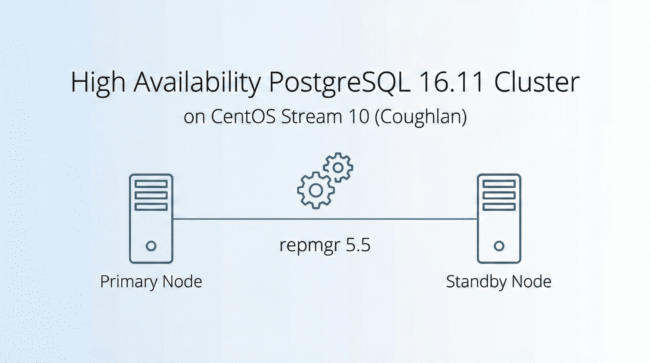
High Availability PostgreSQL 16.11 Cluster with repmgr 5.5 on CentOS Stream 10 (Coughlan)

Introduction High availability (HA) is a critical requirement for modern database infrastructures, ensuring minimal downtime and seamless failover in case of node failures. PostgreSQL, while robust as a standalone database, requires additional tooling to manage replication, failover, and cluster orchestration in multi‑node environments. repmgr (Replication Manager) is a widely adopted open‑source tool that simplifies the…
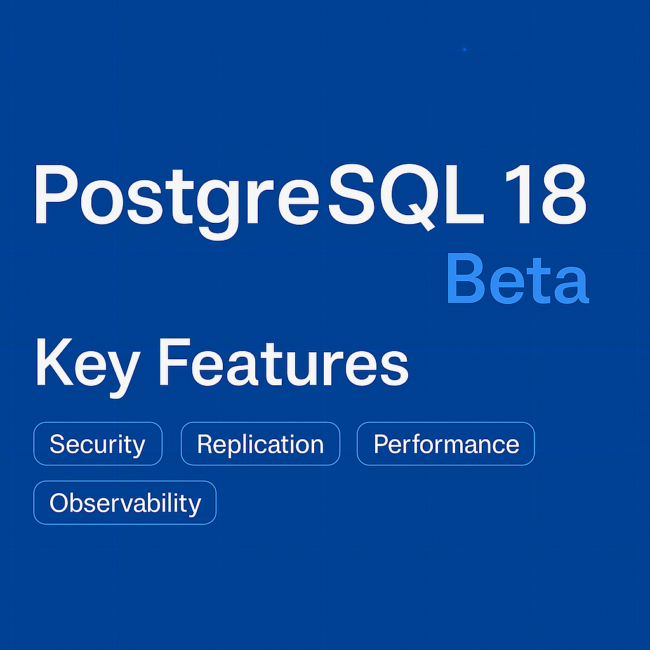
What’s New in PostgreSQL 18 Beta: Performance, Insight and Control

PostgreSQL 18 , which is presently in Beta, offers a robust feature set that enhances security, replication, performance, and observability(PostgreSQL 18 Beta). The main improvements are already obvious—and exciting—even though the final GA (General Availability) release may fine-tune several elements. Here’s a concise overview of what’s coming: ⚡ Performance Enhancements Asynchronous I/O: A major milestone.…

New Features in Mysql 8.4 from Mysql 8.0

MySQL 8.0, a reliable base in database management, has been continuously updated with new functionalities and enhancements. This blog explores the performance, security, user-friendly tools, and New features in MySQL 8.4, providing insights for both experienced database administrators and developers to maximize the capabilities of this transformative database management tool. Following are the new features…

postgresql16

A Glimpse into the Future: Series of What’s New in PostgreSQL16 ?

A Glimpse into the Future: Series of What’s New in PostgreSQL16 ? On September 14, 2023, the PostgreSQL Global Development Group introduced PostgreSQL16, marking the latest release of the renowned open-source database. This version brings significant enhancements in performance, particularly in query parallelism, bulk data loading, and logical replication, including expanded SQL/JSON syntax, additional monitoring…

postgresql16

Optimizing Initial Sync for Large Databases in RDS PostgreSQL using pg_dump in Logical Replication

PostgreSQL provides a built-in logical replication system based on the publish/subscribe model, where a publisher publishes data changes to a publication, and a subscriber subscribes to the publication and receives the changes. Logical replication can be configured and managed using SQL commands and functions or third-party tools and libraries. The user creates the publication on…